On reading HPLC traces. Read →
Lyochem

Analytical Methods · Lot Data First

The methods we run on every release.

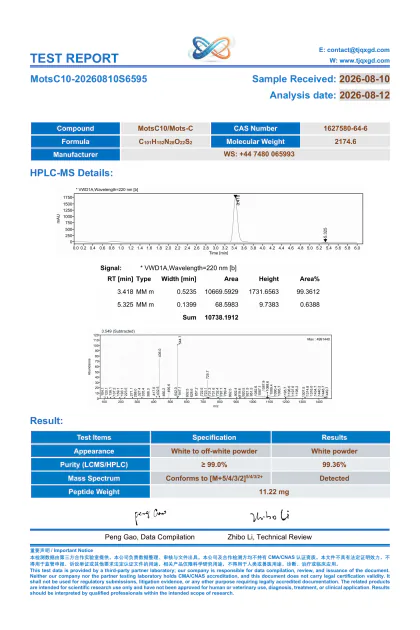
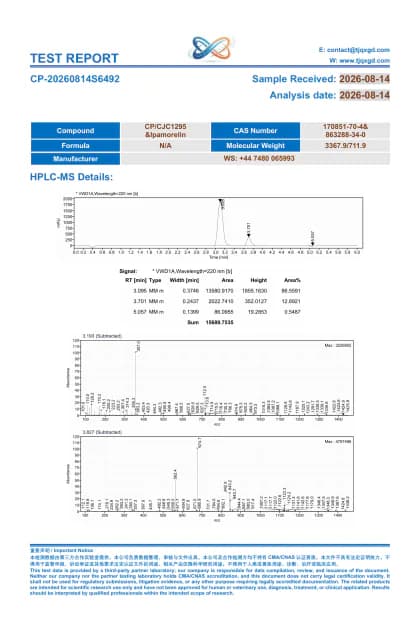
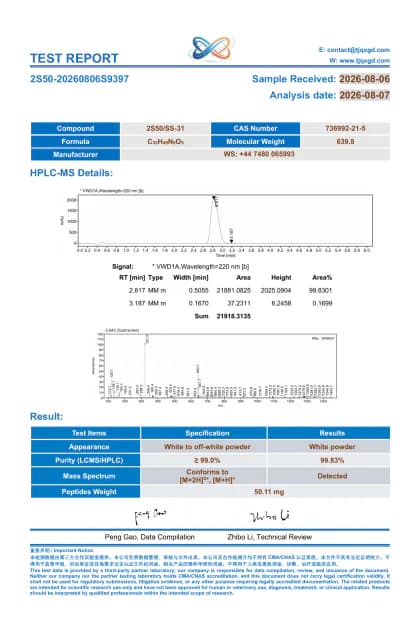
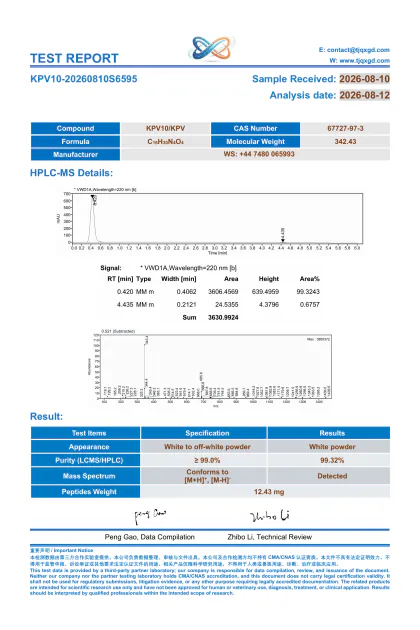
Every commercial lot ships with an RP-HPLC chromatogram, ESI-MS identity confirmation, LC-MS/MS sequence verification, Karl Fischer water content, and the relevant stability time-course. The document is structured to read like a paper's methods section, because that is who reads it.

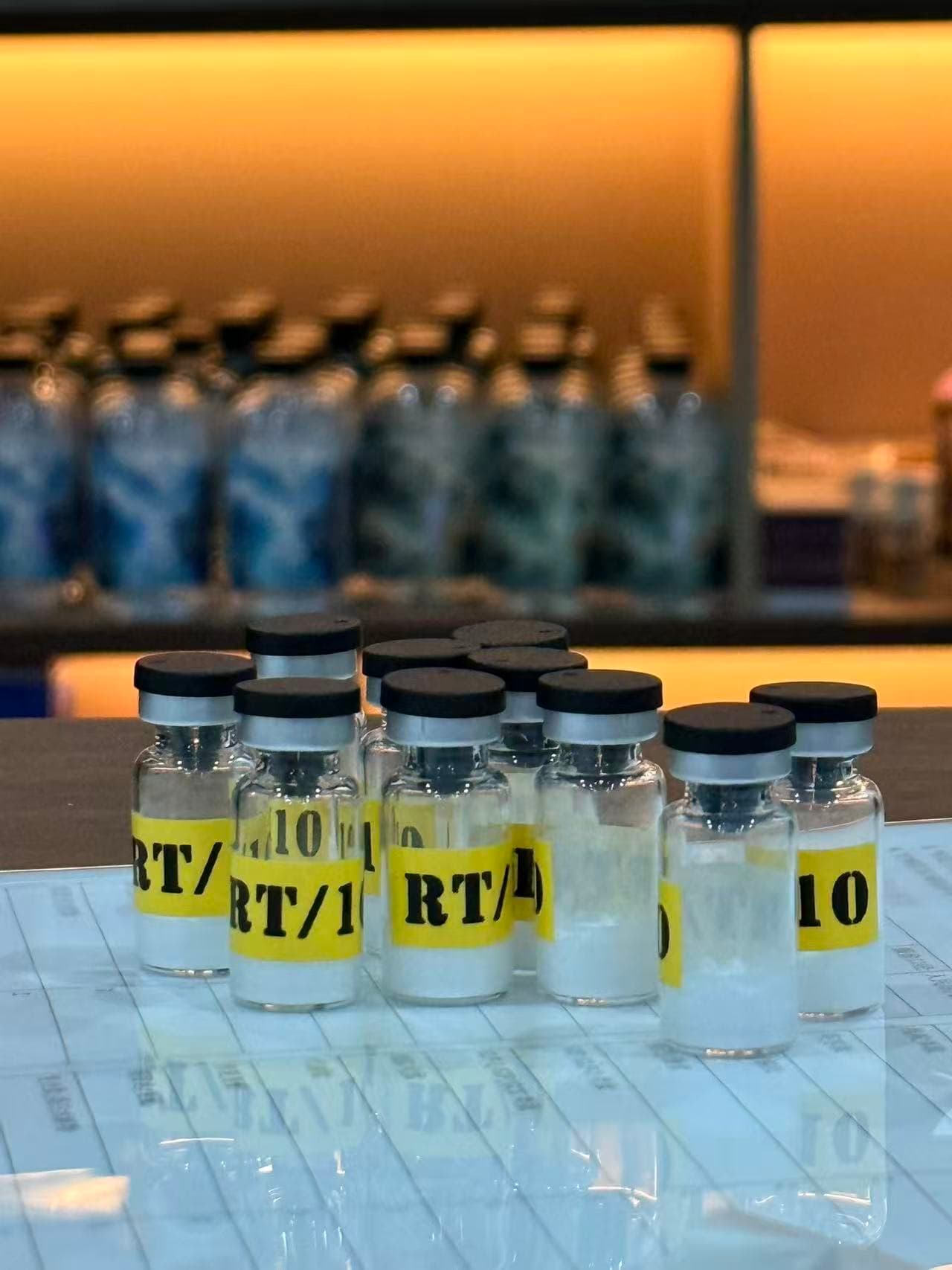
Lyochem lot release bench — lyophilised research-peptide vials photographed under the analytical-lab inspection lamp; every vial label corresponds to a lot-specific RP-HPLC chromatogram and ESI-MS identity confirmation.

Lot Report · Excerpt

TB-500 · Lot LC-26-B0312

Released
RP-HPLC purity
98.94 %
ESI-MS [M+H]⁺
4961.4 Da
MS/MS sequence
Confirmed
Water (KF)
5.2 %
Counter-ion
Acetate
Stability (12 mo)
≥ 97 % retained

The lot report is the document you reference in your supplementary materials and your supplier-qualification file. Every release carries the same scope.

Illustrative lot report excerpt · TB-500 lot LC-26-B0312 · representative scope released with every shipment

Quality you can verify

Lot data first. Sales second.

Every Lyochem lot is released with its own analytical packet — chromatogram, mass spectrum, sequence confirmation, water content, stability. Methods are aligned with USP <1225>, EP, and ICH Q2 — the document a paper reviewer or CRO QA team can read directly off the page.

≥98.5%

HPLC purity floor

MS/MS

Sequence verified

12-mo

-20 °C stability

RP-HPLC + ESI-MS on every release, integrated purity reported at the main retention time, mass within ± 0.5 Da of theoretical.

LC-MS/MS sequence on request — b- and y-ion ladder assignment against the theoretical sequence; full-ladder coverage reported on the data packet.

−20 °C stability programme through 12 months; accelerated 40 °C add-ons on request for first-time supplier qualification.

Core release tests · On every lot

What every Lyochem release is tested for.

The core release panel runs on every commercial lot before shipment. Method provenance for each row tracks USP <621> (HPLC), USP <1225> (analytical validation), ICH Q2 (analytical method validation), and EP equivalents. The lot report carries the numerical value, the method line, and the release decision against the documented target.

TestMethodTarget
RP-HPLC purityC18 gradient, 214 nm + 280 nm; USP <621> + ICH Q2 aligned≥ 98.5 %
ESI-MS identityESI-MS, monoisotopic [M+H]⁺ vs. theoreticalConfirmed (±0.5 Da)
Sequence verificationLC-MS/MS, full b/y-ion ladder for peptides > 5 aaSequence confirmed
Water content (KF)Coulometric Karl Fischer≤ 8.0 %
Counter-ionIon chromatographyAcetate (default) or TFA (specified)
Residual solventsGC headspaceICH Q3C limits

Stability programme

What 12 months of stability data look like.

Lyochem maintains a rolling stability programme on the lyophilised lots in the catalogue. The −20 °C 12-month time-course is included with the lot report as standard; accelerated (40 °C / 75 %RH) and solution-stability add-ons ship on request and are recommended for buyers whose workflow holds the active outside cold chain or pre-prepares working stocks.

TestMethodTarget
Lyophilised stability (−20 °C)Time-course RP-HPLC + ESI-MS through 12 months≥ 95 % retention at 12 mo
Accelerated stability (40 °C / 75 %RH)Time-course RP-HPLC through 1 / 3 / 6 monthsDocumented decay rate
Solution stabilityTime-course at reconstitution + 24 / 48 / 72 h in BAC water / PBSDocumented

In vivo add-ons

Endotoxin + microbial limits, on request.

LAL bacterial endotoxin, USP <61>/<62> microbial limits, and granular bioburden testing are not part of the default in vitro release scope — they add 3–5 business days of QC turnaround and are not needed for the bench- scale workflows most academic and CRO buyers run. For in vivo research, however, they are usually a precondition rather than a nice-to-have.

Specify in vivo intent at the inquiry stage and the lot is flagged for the additional release testing; the CoA then carries chemical-purity, sequence-verification, and biological-safety data on a single document, which simplifies IACUC and IRB record-keeping.

TestMethodTarget
Bacterial endotoxin (LAL)Gel-clot or kinetic chromogenic per USP <85>< 0.25 EU/mg (or as specified)
Microbial limitsUSP <61>/<62>Compliant
BioburdenMembrane filtration + plate countDocumented CFU/mg

Lot report contents

What lands on your bench.

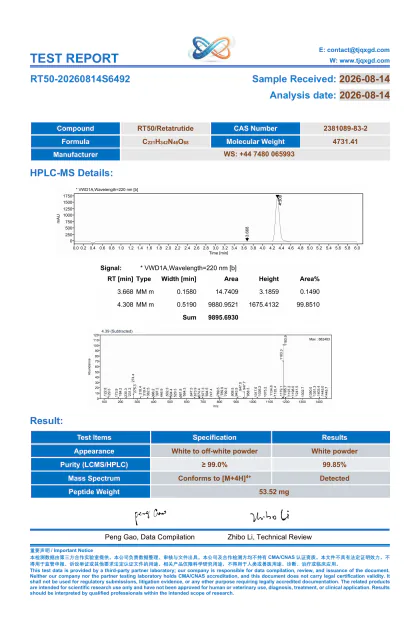
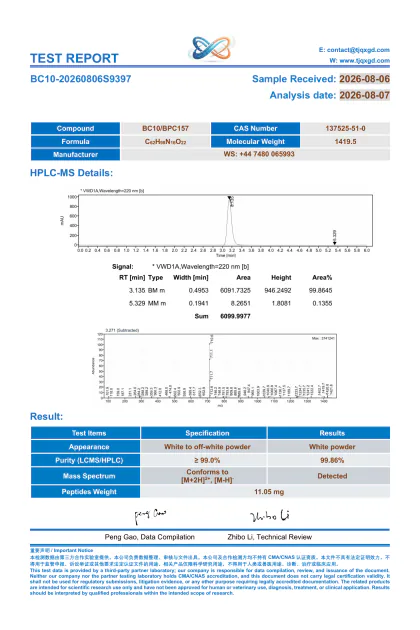
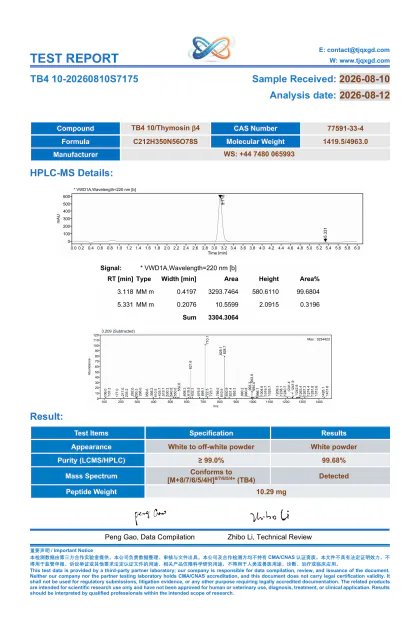
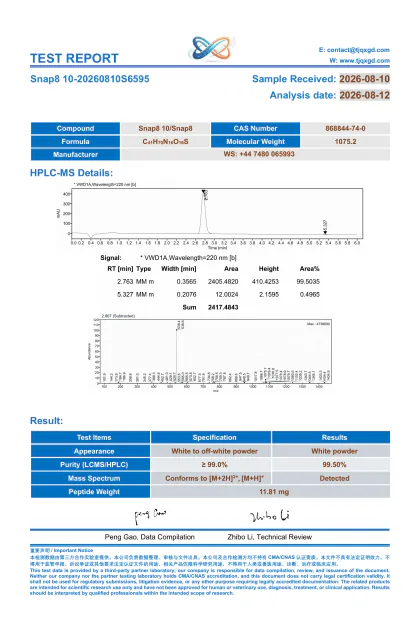
Every commercial release ships with the lot report below. On request we attach the raw analytics — RP-HPLC chromatogram with peak integration, ESI mass spectrum, MS/MS sequence ladder, stability time-series — as the QA work-packet your supplier-qualification dossier or supplementary-materials file needs.

RP-HPLC chromatogram

Peak-integration trace with retention times and integrated areas; the document you cite in supplementary materials.

ESI-MS identity

[M+H]⁺ vs. theoretical with the residual mass error in Da. Confirms molecular weight to ±0.5 Da.

LC-MS/MS sequence ladder

Full b/y-ion ladder for peptides above 5 amino acids. Directly demonstrates synthesised sequence.

Water content (KF)

Coulometric Karl Fischer titration. Lyophilisation-cycle control.

Counter-ion

Acetate by default; TFA on request. Affects solubility, stability, and downstream bioassay readouts.

Stability time-course

−20 °C 12-month lyophilised; accelerated 40 °C and solution-phase on request.

Request a data packet.

First reply under 12 hours from a synthesis chemist or analytical contact — not a templated auto-response. Lot-specific HPLC chromatogram, ESI-MS identity, MS/MS sequence (on request), KF water, and stability data returned with the quote.

WhatsApp